New to tournaments?
-
If you know all the rules of chess and checkmate, you can and should (!), play in tournaments.
Tournaments are not reserved for only the high level players,
They are for any chess player who wants to play in a competitive environment and be part of the energy, atmosphere, and community of tournament chess.
-
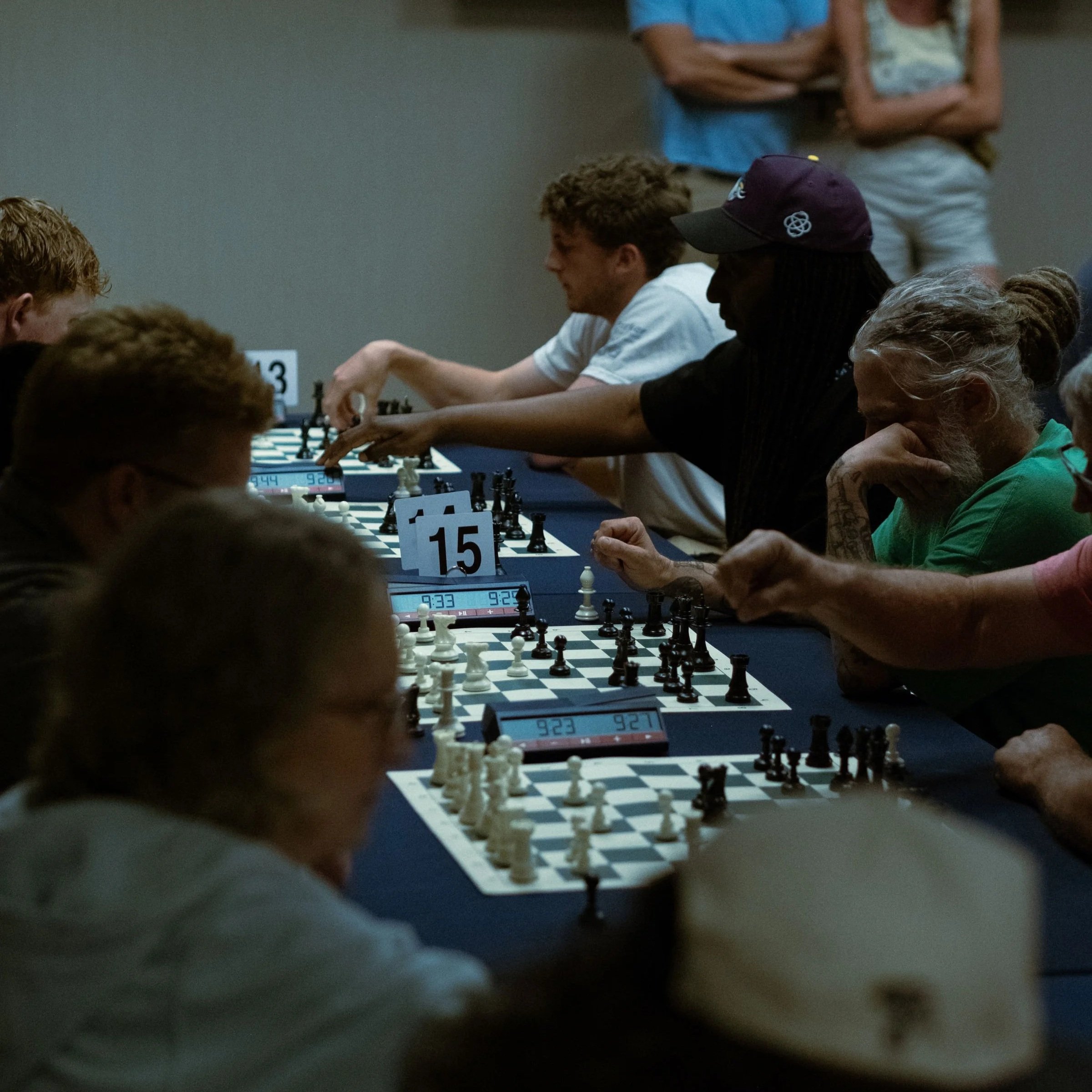
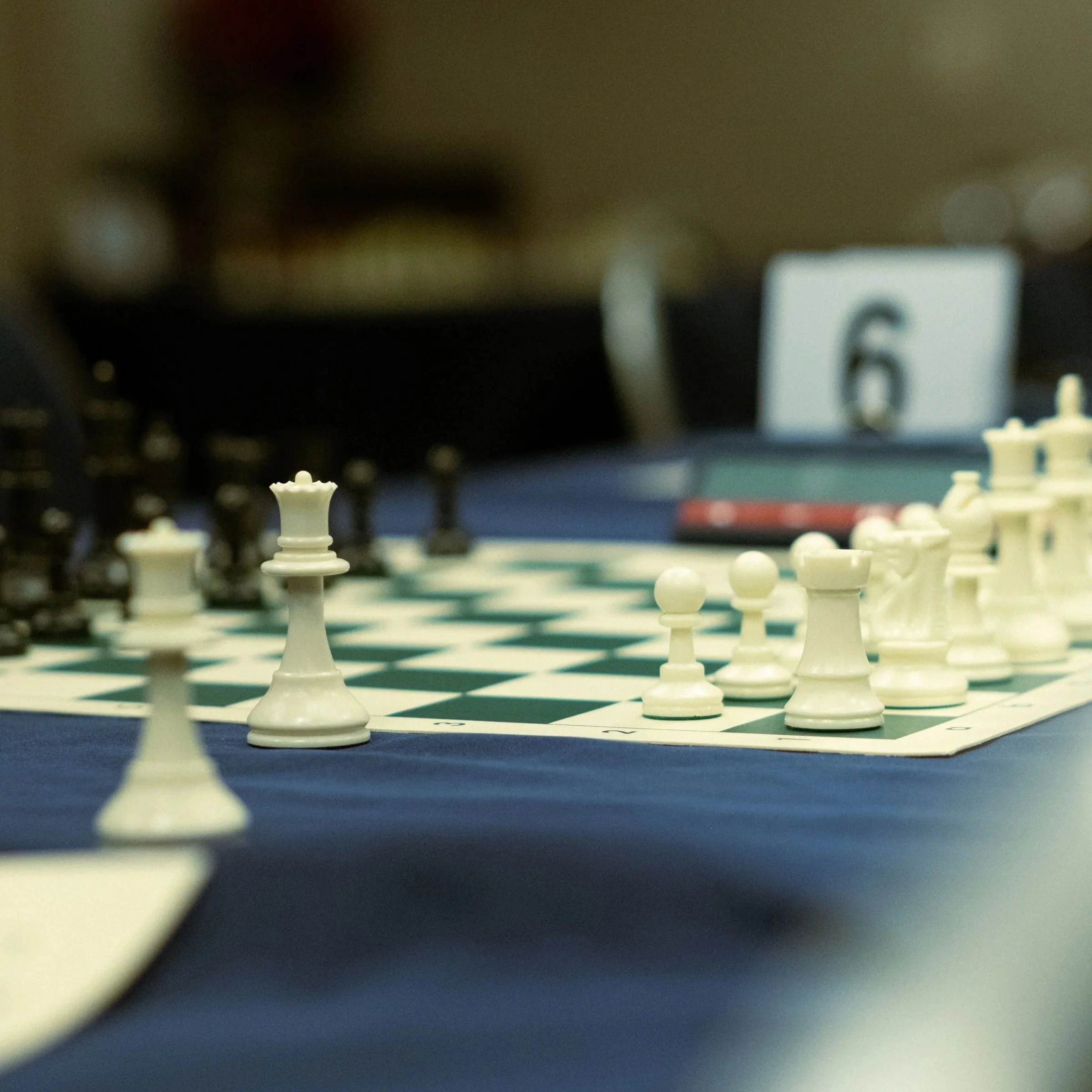
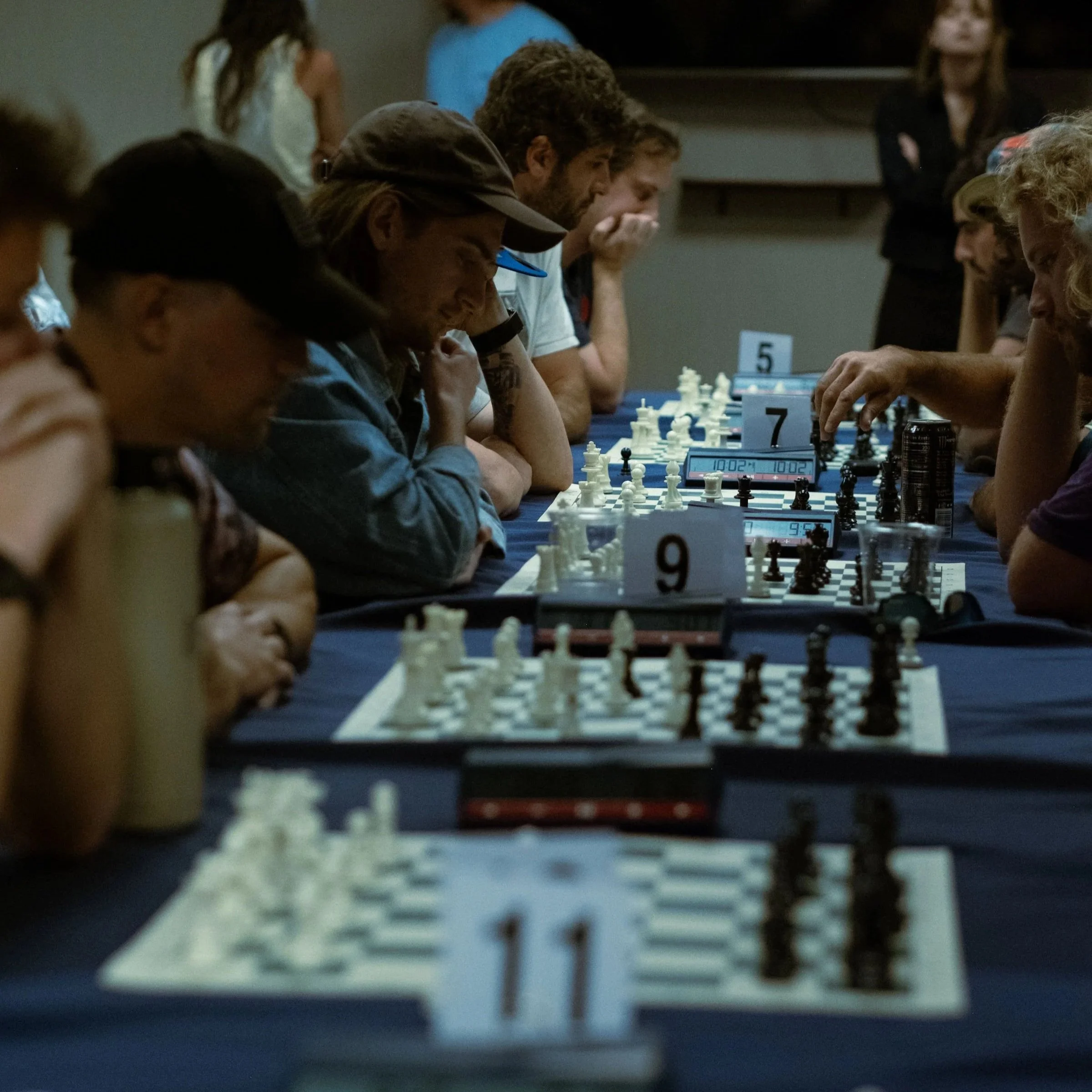
The tournament room will have chess sets laid out on numbered boards. For example, a 64-player tournament will have 32 boards labeled 1–32.
Before each round, a pairing sheet will be posted. Find your name to see your board number and whether you’re playing White or Black. (For example: Round 1 — Board 5, White.)
Once your game is finished, report the result to the tournament director. Then you’ll wait while the remaining games finish.
After all games are complete, new pairings will be created for the next round. An announcement will be made, pairings will be posted, and you’ll find your next board and opponent.
Standings are based on points:
• 1 point for a win
• 0.5 points for a draw
• 0 points for a loss
At the end of the tournament, the player with the most points is the winner.
-
Swiss style tournaments are the most common tournament format.
In a Swiss tournament, you play one game per round. If you win, you get 1 point. If you draw, you get ½ point. If you lose, you get 0 points.
Each round, players are paired against others with a similar score. This means:
Winners play other winners
Players with the same number of points often play each other so you will play someone doing about as well as you are.
You won’t play the same person twice and generally play equal games as white and black.
Maybe after 5 rounds, there are two players left who are undefeated. For the final round they would be paired against each other to determine the winner of the tournament.
The player with the most points at the end of the tournament wins.
-
In a rated tournament, your games are submitted to the United States Chess Federation (USCF) and will affect your official rating.
That rating carries over to any USCF-rated tournament you play across the country.
Because of this, rated events follow and strictly enforce USCF rules and guidelines.
A USCF membership is required to participate in rated events.
-
Chess clocks are used in all tournament games. Each player is given a set amount of time for the entire game. For example, G/10 means each player has 10 minutes total.
When your opponent makes a move, they press their side of the clock—this stops their time and starts yours.
While it’s your turn, your clock is running. After you make your move, you press your side to stop your time and start your opponent’s.
If your time runs out, you lose the game—as long as your opponent has sufficient material to checkmate.